

Celebrating Matt Bernstein

An interview with Matt Bernstein after 34 years of service at STUDIO tla
What drew you into landscape architecture originally, and what kept you committed to it over the decades?
My first degree in Environmental Geography introduced me to many of the core ideas around sustainability, but at the time there was little discussion about how to put those ideas into practice. A formative course with Dr. Kenneth Hare at Trinity College, focused on human impacts on environmental systems, pushed me to think more seriously about how those theories could be applied in the real world. Landscape Architecture became the right path for that, giving me a way to translate those early lessons into built work. What continues to motivate me is the opportunity to shape spaces through that lens, while responding to the many systems and influences that affect a project, and ultimately seeing those ideas realized successfully in the finished work.
When you look back over 3 decades, what themes or values consistently guided your work?
For me, sustainability has always been central to every project I’ve worked on. That includes not only environmental considerations, but also the human and built-form dimensions of a place. I’ve always believed it’s important to recognize that what we design in this profession will continue to grow and change over time, and to ensure it evolves in a positive and meaningful way. Professionally, I also understand that we are consultants, and that carries a responsibility to our clients, to the places we shape, and to the profession as a whole. We have a duty to provide the best service we can.
Which project felt like a turning point in your career, and why?
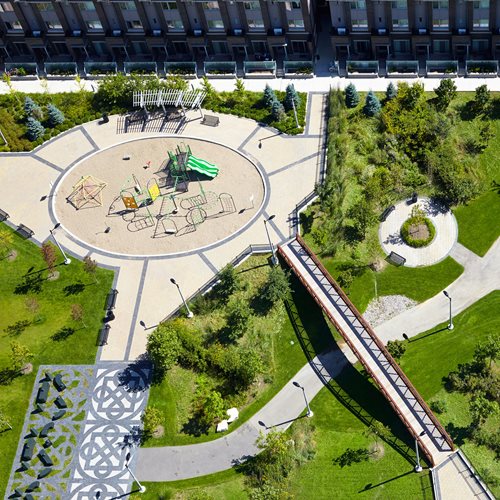
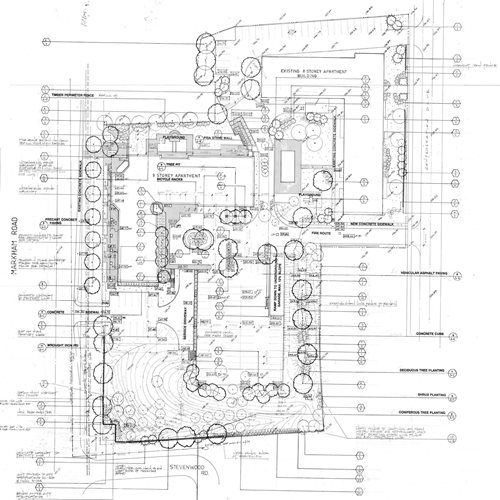
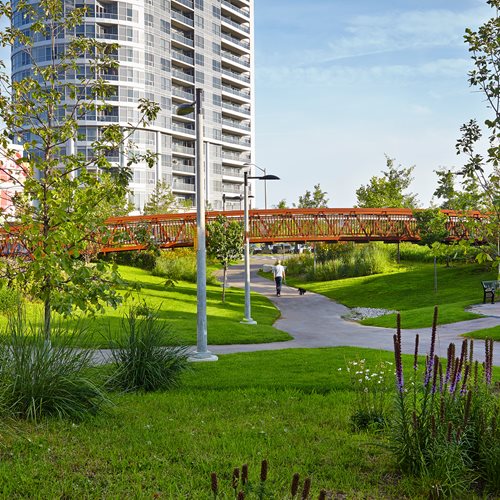
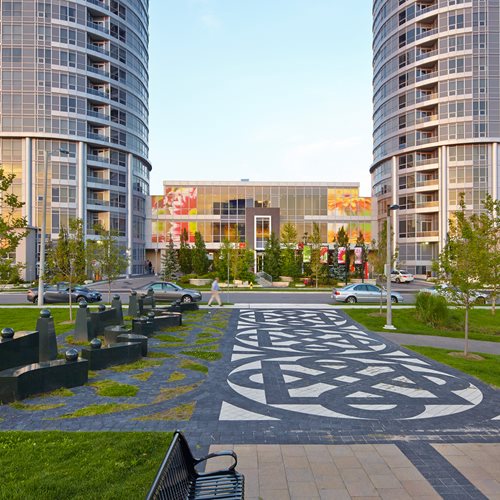
A real turning point for me was the Metrogate project by Tridel in Scarborough. It was a LEED Silver development with several new residential condominium buildings organized around a large central park. What made the park especially unique was that all of the stormwater was captured and returned to the water table, without relying on conventional stormwater infrastructure. I really enjoyed designing the park as a new ravine, with vegetated slopes and a bridge connecting one side of the park to a playground on the other. The project also included an artist collaboration, and I had the opportunity to work closely with the artist to help realize her vision.
How has the practice of landscape architecture in Ontario changed since you started, professionally, culturally, and technically?
I believe the fundamentals of landscape architecture have remained consistent since I began. The core values I started with are much the same as those we continue to apply today. What has changed significantly is the technical side of the profession. The way we approach projects, and the tools we use to communicate our ideas, have transformed the practice. When I started, plans were still drawn by hand, and there were no digital tools or internet-based communication. Collaboration with peers was more direct and in person, and we spent far more time on site during construction. Today, coordination with other disciplines is much more rigorous, and the resulting drawing packages are far more extensive. In 1992, a condominium package might have included only a handful of plans and details, enough to convey the overall intent.
What makes a landscape “successful” five or ten years after construction?
I think there are two parts to that question. The first is whether the design is still relevant and functioning as the designer originally intended five or ten years later. If it is, then the project can be considered successful. I’ve often felt that landscape design is a bit like fashion, in that trends shift over time, though a well-executed design that is truly aligned with the built form can remain relevant for decades. A 1960s modernist landscape like the Seagram Building in New York is a good example of that. The second part is about using the right materials and ensuring the work is installed properly. With good maintenance, and if the project can endure wear and resist deterioration, it will continue to succeed over time.
What’s one detail or element you always cared about getting right on a project?
As my experience grew, I became more aware of the details that would endure over time, and I adjusted my designs to reflect a more sustainable approach. That applied to everything from paving layouts to planting design. I always wanted to ensure that what we designed was compatible with the architectural and engineering components of the project, with particular attention to making sure the planting design was appropriate.
What kind of impact do you hope your work has on people and communities?
I’ve always hoped that my work would reinforce a sense of place within an existing community, or help establish a new focus for a new one. I’ve long been interested in using landscape design together with built form to shape different realms and experiences within a place. Throughout, sustainability has remained a consistent theme, in both the hard and soft materials we use. I’ve also always tried to define the pedestrian scale, and I hope the work the office has done continues to reinforce that aspect of the design.
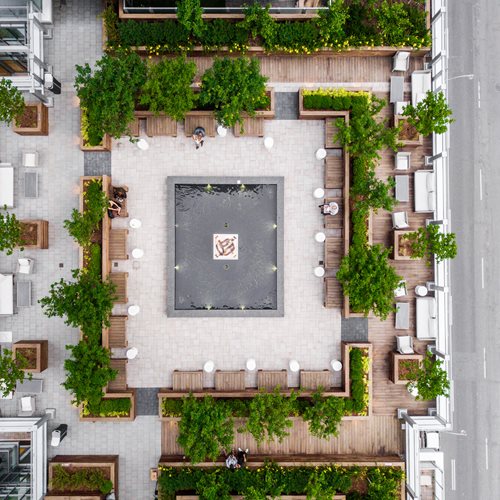
How do you balance beauty, function, budget, and maintenance realities?
This is always a difficult balance to strike, and it can be discouraging when a design encounters shifting budget realities. I think the key is to establish a strong enough vision that it can withstand those pressures, including maintenance demands. Materials may change, but the vision should remain constant.
Is there a project you feel especially proud of because of what it achieved socially or environmentally?
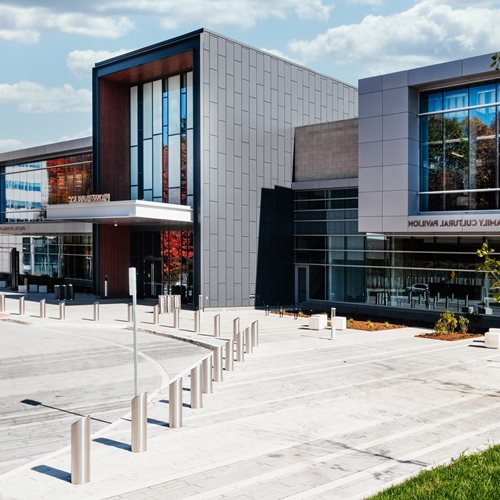
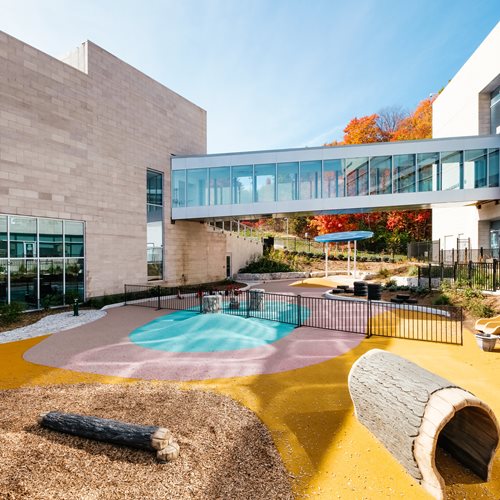
I always felt the Sherman Campus Jewish Centre was a special project, and I’m proud of the work we did there. It brought together many intertwined site, environmental, cultural, and security considerations in a thoughtful and sensitive way. Environmentally, we responded carefully to the site’s location within a ravine system connected to a branch of the Don River, creating access to the sounds and views of the river while incorporating bioswales throughout the hardscape and parking areas to manage runoff responsibly. Culturally, the project was equally significant as a hub for the Jewish community, and we wove Jewish imagery into the landscape in a meaningful way. At the same time, we addressed important security requirements with care. The result is a beautiful and meaningful asset for both the immediate community and the broader cultural community.
What advice did you give most often to younger designers?
Sometimes I find that younger designers can make things more complicated than necessary. I’m not always sure whether that comes from overthinking, but I’ve found that simplicity and elegance often lead to the most beautiful designs. That’s something that took me a long time to learn. Sometimes the best approach is to step back, clear away the clutter, and focus on creating something graceful and sophisticated.
Who were key mentors for you, and how did they shape your path?
When I first graduated, I was fortunate to work closely with Walter Kehm at EDA, where I was involved in many of his projects. He taught me a great deal about design and its broader meaning. I was also lucky to learn from teachers like Michael Hough and Steve Moorhead, whose approach to design and landscape architecture set a strong standard that stayed with me throughout my career. Even earlier, while I was still a student, I worked with Neil Melman at the Borough of York, who taught me the importance of enjoying the profession and having fun in the work.
What do you think landscape architecture firms will need to do better over the next decade (climate, housing, equity, biodiversity)?
Landscape Architecture has always been a profession that bridges the gap between environmental stewardship and the built-form world. Over the next ten years, I believe landscape architects will need to develop deeper expertise in specific areas and become truly indispensable to project teams. Environmental sustainability will remain a major focus, particularly in relation to biodiversity and climate responsiveness. In built-up areas, I also believe we will need to become more capable of leading the master plan, sometimes even ahead of architects, so that our skills can help ensure the overall success of a project.
What should never change about the profession of landscape architecture, no matter how technology evolves?
The ability to explore and think about the relationship between humans and nature and what it means and where that relationship is going. Despite all the professional challenges and the changes in technology, I hope the fun we have in design never changes.
What are you most looking forward to in retirement?
So many things. I’m looking forward to spending more time with music, and I’ll also be working with Sandra Horst, who runs the Opera Department at U of T, to learn more about set design. I’m excited to visit my kids in Europe and do more travelling with Risa as well. I’m also looking forward to riding my motorcycle with the club, taking hands-on art courses like painting and glassblowing, and maybe even doing some hands-on design work on small gardens for friends. There’s definitely lots on my plate.
How do you hope to stay connected to the design community?
I’m going to maintain my stamp and remain a member of both the OALA and the ASLA, so I’ll continue to stay current with the profession. I’ll also have more time to attend exhibitions and lectures at the Daniels School. And of course, I plan to stay in touch with many of my clients, who have become friends over the years.
What would you like to say to colleagues and collaborators who have been part of your journey?
First of all, a huge thank you for giving me the opportunity to collaborate with you on so many exciting projects and to be part of the design process. I like to think that we’re in one of the most captivating professions, where the ideas we imagine can actually become reality. How many people get to walk through a place, look at a landscape, and say, “I thought of that!"